
Pratt Fashion Design BFA Review for High School Applicants
Fashion school admissions blog · Reviewed November 22, 2026
A pair of muddy boots on a landing can be more useful to a Pratt applicant than another evening drawing clothes from memory. The boots have weight, the laces fall unevenly, and the shadow tells you where the sole leaves the floor. Pratt asks first-year fashion applicants to include work from direct observation. That makes looking closely a practical part of preparing for the program.
A Brooklyn BFA built around material and form
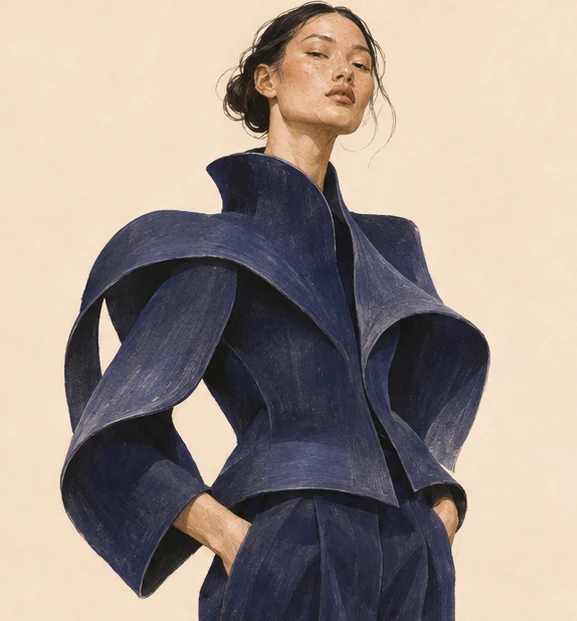
Pratt frames fashion through the body, identity and the effects of choosing and shaping materials. Its curriculum connects cutting and three-dimensional construction to cultural context and communication. The senior thesis has both exhibition and runway formats. Those settings pose different questions. A viewer standing near an exhibited garment can see an edge treatment. A runway viewer can see whether the garment changes shape as the wearer walks. Pratt Fashion Design BFA
Use the published thesis lookbook as a research tool. Choose one silhouette that interests you and redraw only its outline. Then ask what creates it. Is it the stiffness of the fabric, where a panel is cut, or an understructure you cannot see? Make a note of the question for a visit. A lookbook documents an outcome. It becomes useful for choosing a school when you use it to investigate the teaching behind that outcome. Pratt senior thesis lookbook
What goes into a Pratt fashion design portfolio?
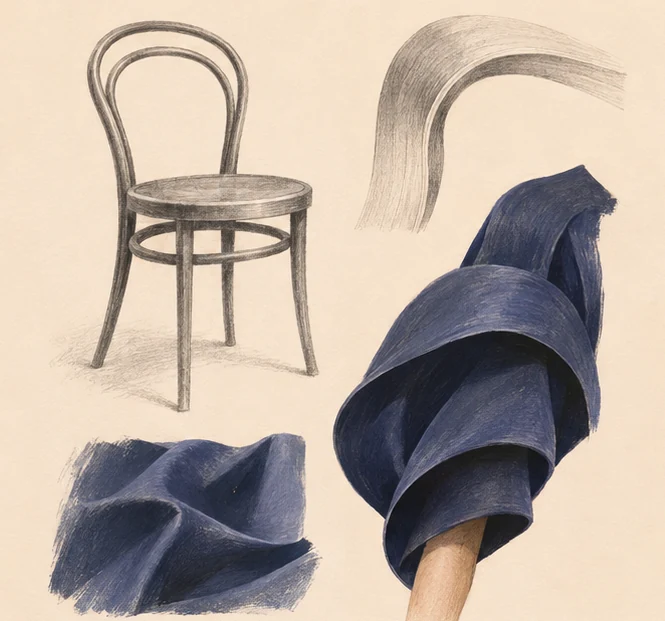
High school applicants for Fashion Design submit the general visual portfolio. Pratt asks for ten to twenty artworks, including three to five examples made by observing real three-dimensional subjects. It welcomes multiple media and asks applicants to present finished work, with selective use of process. The school also requests documentation such as the medium, dimensions and year. Use the high school instructions if you are a first-year applicant. Pratt high school applicant requirements
A drawing from a photograph can be valuable work, but reserve the direct-observation slots for subjects you observed in person. Set two objects together so one partly blocks the other. Sit at a single viewpoint and draw what you can see. If the result feels flat, look for the contact shadow and the change in scale between foreground and background. A drawing of an ordinary subject gives you plenty of opportunity to demonstrate attention.
How to choose between a sketch and a finished piece
Lay your candidate works out in two rows. Put work that reads on its own in the first row. In the second, put material that explains how one of those pieces developed. Start building the portfolio from the first row. Add a process view when it answers a question a reader would genuinely ask. A photograph of a half-scale drape can explain a surprising shoulder line. Several near-identical pencil thumbnails may add little to a resolved drawing.
Then check the group for repetition. A quiet observational work can give the reader a useful pause between complex designs. A three-dimensional object might disclose a feel for negative space that your garment photographs miss. The test is whether each selection gives the viewer another way to understand what you see.
Who will enjoy Pratt’s approach?
Consider Pratt if you want fashion inside a larger art and design education and you enjoy working from material experiments as well as visual observation. If drawing from life is unfamiliar, set aside practice time before you plan the final submission. Ask current students what a critique looks like when a garment is still on the form and how they document that stage for the thesis exhibition.
Does every artwork have to be fashion-related?
Pratt allows a general visual portfolio for Fashion Design. Include strong work from another medium when it contributes something distinctive. Keep the drawing requirement visible on your checklist as you decide which pieces make the final cut. Pratt high school applicant requirements
Continue your portfolio research
Read the Rhode Island School of Design review or compare all ten U.S. fashion design programs. For feedback on your own draft, see Helen Sotropa’s private fashion portfolio review.