
10 Top Fashion Design Schools in the U.S. and What to Put in Your Portfolio
Fashion Portfolio Review · Admissions guide · Research checked November 22, 2026
Turn a jacket inside out and lay it on a table. For an FIT applicant, that view could be part of the required sewing submission. For a Pratt applicant, the same jacket draped over a chair could become a drawing made from direct observation. At SCAD, the decision comes one step earlier. Are you assembling a portfolio for scholarship consideration? A student searching for the best fashion design schools in the U.S. can spend weeks making the wrong thing simply by assuming all three schools ask the same question.
This guide compares ten U.S. undergraduate programs for students interested in designing and making clothing, textiles and wearable objects. The editorial selection spans art schools, public universities, a specialized fashion college and two co-op models. Each program offers a distinct studio experience and publishes enough information for a family to examine how it works. Read the schools in any order. The project ideas are our suggestions for exploring fit. The linked school instructions govern the work you submit for your term and applicant type.
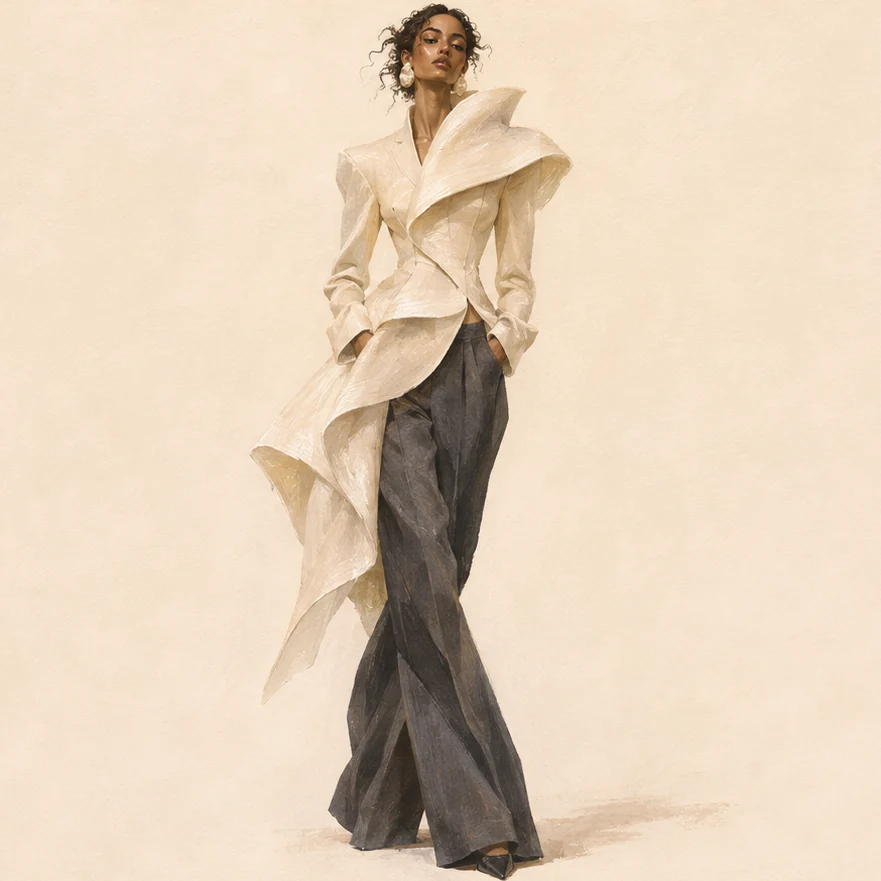
U.S. fashion design schools and portfolio requirements at a glance
Find a school below to jump to its profile. Pay attention to what the school counts. A slide can hold multiple images at Parsons, while FIT specifies particular views of a garment. Keep each college’s counting unit in your application notes.
| School | Degree and application detail |
|---|---|
| Parsons School of Design | Fashion Design BFA · 8–12 slides |
| Fashion Institute of Technology (FIT) | Fashion Design AAS → BFA options · Set design and sewing brief |
| Pratt Institute | Fashion Design BFA · 10–20 artworks, including direct observation |
| Rhode Island School of Design (RISD) | Apparel Design BFA · 12–20 samples |
| Drexel University | Fashion Design BS · 8–12 works and a six-month co-op |
| School of the Art Institute of Chicago (SAIC) | BFA study in Fashion Design · 10–15 works |
| Kent State University | Fashion Design BA · Selective BFA entry later |
| University of Cincinnati | BS in Design, Fashion Design · Five co-op semesters available |
| Savannah College of Art and Design (SCAD) | Fashion BFA · Optional portfolio for achievement scholarship consideration |
| Otis College of Art and Design | Fashion Design BFA · Open or structured first-year portfolio |
Parsons School of Design
Read the full Parsons School of Design program and portfolio review
New York, NY
If the part of a garment you remember is the cloth, look closely at Parsons. Its Fashion Textiles pathway gives dyeing, weaving, printing and knitting room to generate the design itself. Fashion Product starts from a different question about objects worn or used in relation to the body. Womenswear and Menswear round out the four pathways. Two students entering the same BFA could spend an absorbing afternoon on entirely different problems, one developing a repeat pattern, the other working out how a bag distributes weight across a shoulder.
Parsons asks first-year BFA applicants for eight to twelve slides and allows more than one image on a slide. That makes editing part of the assignment. Imagine you are working with an inherited tablecloth. Put the intact motif beside a sample you cut and reassembled, then show where the new motif lands when the wearer bends an elbow. Three images earn their space because the reader can trace a decision. A fourth photograph of the same sleeve needs to reveal something new. Parsons welcomes a range of media and discourages styling submissions built from purchased clothing. Make it easy to see which part of the work is yours.
Fashion Design pathways · Parsons portfolio requirements
Fashion Institute of Technology (FIT)
Read the full Fashion Institute of Technology program and portfolio review
New York, NY
At FIT, start by reading the assignment all the way to the sewing photographs. A high school applicant looking at Fashion Design generally starts with the associate in applied science (AAS). The later BFA curriculum includes options such as Knitwear and Sportswear. That sequence matters when you search for FIT fashion portfolio requirements. A first-year applicant needs the AAS instructions for the intended entry term. A portfolio assembled for a later stage answers a different question.
The published AAS brief pairs a short essay with design work and evidence of sewing. It calls for coordinated separates, original figure drawings, technical back views and photographs of two machine-sewn garments, including their interiors. Think about a lining that keeps catching in a zipper. An inside photograph can show the change you made to keep it clear. A dramatic outdoor photograph of the coat might conceal the very detail that demonstrates your skill. Budget time to turn each garment inside out, photograph it in even light and read the instructions again with your images in front of you. FIT publishes separate term-specific directions and restricts generative AI in developing the work and essay. Read the version that applies to you before beginning the project.
FIT degree curricula · AAS portfolio brief · Spring 2027 brief
Pratt Institute
Read the full Pratt Institute program and portfolio review
Brooklyn, NY
Pratt’s Fashion Design BFA puts the choice of materials in conversation with identity and the body. Its senior thesis lookbook gives applicants a way to investigate what that means. Pick one collection, cover its statement and study two looks. Where does the designer repeat a shape? What changes when the material changes? Then read the statement to see whether you noticed the same idea the designer wanted to communicate.
Pratt asks fashion applicants for its general visual portfolio. The high school instructions call for ten to twenty artworks, with three to five examples made by observing three-dimensional subjects directly. A jacket on the back of a kitchen chair offers an excellent subject. Draw it in window light and notice where the empty sleeve collapses. Move the chair and look at the shape again. Choose the drawing that best explains volume. Pratt also asks for resolved work and advises restraint with process pages. If the observational drawing is strong enough to stand alone, give it its own space.
Pratt Fashion Design BFA · High school application requirements · Senior thesis lookbook
Rhode Island School of Design (RISD)
Read the full Rhode Island School of Design program and portfolio review
Providence, RI
RISD calls the major Apparel Design. Its curriculum gives a good reason to pay attention to that word. Sophomores study clothing and bodily ornament as expressions of identity while learning construction. Juniors explore knitwear by hand and machine, where a shift in stitch can change the shape and behavior of the fabric. If you enjoy the stretch of making something whose outcome you cannot yet predict, look at the work students do in those middle years.
RISD asks first-year applicants for twelve to twenty samples. A useful editing question is what your reader learns from turning the page. Suppose you pulled a knit sample sideways, discovered a ridge and used that ridge to shape a shoulder. A close-up of the sample, a photograph on the body and a drawing from another project can show three different abilities. Twenty polished illustrations of the same pose may reveal less about how you work. If you have ceramics, printmaking or sculpture that helps someone understand your eye for form, consider it alongside the clothing.
RISD Apparel Design curriculum · First-year portfolio preparation
Drexel University
Read the full Drexel University program and portfolio review
Philadelphia, PA
Drexel connects its Fashion Design BS to a six-month industry co-op. For someone deciding between studio school and professional practice, the appeal is the return trip. A student who has watched a sample move between a designer, a patternmaker and a production team comes back to class with better questions about how an idea survives those handoffs. When you visit, ask a returning co-op student to describe one drawing they now make differently.
Fashion Design is on Drexel’s required-portfolio list. Its first-year instructions ask for eight to twelve recent pieces that show technique and ideas across media. Try explaining a design to a classmate who has never seen it. If they cannot tell how a wrap closes, a small drawing of the fastening might do more than a second full-length pose. If the mechanism is already clear, use the next slot for a different piece. The exercise trains you to choose the view another person needs, a skill that travels well between a studio critique and a workplace.
Fashion Design co-op · Drexel first-year portfolio instructions
School of the Art Institute of Chicago (SAIC)
Read the full School of the Art Institute of Chicago program and portfolio review
Chicago, IL
At SAIC, students can concentrate in Fashion Design after the Contemporary Practices requirements. The Fashion Design and Construction pathway pairs design with making through a sequence of studios. The Body-Builder pathway allows students to direct electives toward interests such as accessories, embellishment or performance. A prospective applicant who moves between the costume shop, the drawing studio and the stage should look at both routes. They give different amounts of structure to that curiosity.
SAIC’s undergraduate admissions FAQ calls for ten to fifteen works. Imagine a headpiece designed for a dancer who turns quickly. A still photograph can show its silhouette, while a sequence can explain what happens when the dancer changes direction. Drawings of the attachment might reveal a problem that the audience never sees. Choose the view that makes your particular investigation intelligible. If collaborators performed or photographed the work, credit them and describe exactly what you designed and made.
SAIC undergraduate fashion pathways · Undergraduate admissions FAQ
Kent State University
Read the full Kent State University program and portfolio review
Kent, OH
Kent State rewards a careful reading of the degree map. A prospective first-year student starts by investigating the Fashion Design BA. Its curriculum includes construction, two- and three-dimensional design, an internship and a required study-away experience. For a family comparing an Ohio campus with an East Coast school, that last requirement belongs in the budget conversation early. Ask which locations and durations are available, what travel and housing cost, and how aid applies to the option you would actually choose.
The BFA is a later decision. Kent State says students must be in junior-level fashion design studios to seek admission and submit a proposal with a letter of intent. The BFA culminates in a collection and accompanying publication. If you are still in high school, the BA admissions page is the relevant starting point. Keep a simple record of your making now. Date a photograph of each fitting, save a sample and write down what you changed. By the time you have a collection to propose, you will have evidence of which ideas held your attention over time.
BA admission and degree details · BA course and study-away requirements · Internal BFA admission
University of Cincinnati
Read the full University of Cincinnati DAAP program and portfolio review
Cincinnati, OH
At Cincinnati’s College of Design, Architecture, Art, and Planning, known as DAAP, work experience shapes the calendar. All fashion design majors participate in co-op, and the university describes opportunities for five full semesters of professional work. Compare that structure with Drexel’s six-month placement. A student who wants to try several settings may value repeated rotations. Another might prefer a single sustained placement. Ask each school how students find positions, where they live during work terms and how the schedule affects graduation planning.
DAAP’s recruitment guide describes an optional portfolio for fashion design applicants. Its current admissions page also explains that review varies by program, so confirm your entry-term instructions with DAAP. If you choose to submit, consider a project designed for someone you can observe. A cycling jacket might begin with a pocket that spills its contents when the rider leans forward. Show the first pocket, the revised opening and the test that told you the change worked. Such a sequence gives a reader a specific reason to remember the jacket and its designer.
DAAP Fashion Design and co-op · DAAP admissions · DAAP recruitment guide (PDF)
Savannah College of Art and Design (SCAD)
Read the full Savannah College of Art and Design program and portfolio review
Georgia
SCAD’s Fashion BFA makes the development of a senior collection unusually easy to follow on paper. The sequence moves from research and design development into three-dimensional prototypes and then a final collection. Earlier courses cover textiles, draping, computer-aided design and the business of fashion. Read those course titles backward from the collection. Which skill would you most like to acquire so that a sketch you can already draw becomes a garment you can actually make?
SCAD makes a distinction that can save a family considerable time. A portfolio is optional for undergraduate admission. Applicants seeking an achievement honors scholarship can submit a portfolio and a résumé or list of achievements under SCAD’s guidelines. The submission can draw on work beyond the intended major. A student who has built a strong printmaking practice and has only recently begun to sew can consider showing the prints. If a motif has also become a textile repeat, the progression makes a natural pairing. Decide whether scholarship consideration is your goal before scheduling a portfolio shoot.
SCAD Fashion BFA courses · Undergraduate scholarship portfolios · SCAD admissions FAQ
Otis College of Art and Design
Read the full Otis College of Art and Design program and portfolio review
Los Angeles, CA
Otis gives you a view of what it feels like to design to someone else’s brief. In its mentor projects, working designers set a direction and participate in critiques as students refine sketches and work through fittings. That arrangement suits a student who comes alive when a constraint is introduced. Look at a past brief and ask yourself what you would do if the first sketch were turned down. Can you imagine a second solution that still feels like yours?
Otis offers two first-year portfolio routes. The open option asks for ten to twenty images of recent work. The structured option organizes work around portraits, personal narrative and place, with specific image and medium requirements. Choose after taking inventory. If you have years of independent work, the open route may give it room. If your best project follows a family event or a particular neighborhood, read the structured prompts. A borrowed sewing machine on a kitchen table, a relative measuring a hem and a garment worn on the day itself can tell a story. The school’s prompt determines whether that story fits.
Otis Fashion Design mentor projects · Otis undergraduate portfolio requirements
How to narrow your fashion school list
Choose two programs whose students make work you would genuinely like to try. Open one upper-level course description from each. Read the verbs. Will you drape, knit, fit, prototype, exhibit or work with a mentor? Picture an ordinary Tuesday in each program. If your favorite part of sewing is taking a pattern apart and putting it back together, you may care more about access to a fitting studio than the city on the brochure. If you want to find out whether professional design work suits you, the timing and length of co-op rotations may decide the comparison.
Then compare what your family would actually pay and when. Use each college’s net price calculator and ask for its materials estimate. Add the costs that apply to your plan, such as fabric, printing, a dress form, transit, a second move for co-op or housing during study away. Ask a department what equipment students can borrow and whether studio access continues outside class. A family deciding between Cincinnati and Kent State, for example, needs two different calendars as well as two prices. Write down the unanswered question that could change your decision and take it to the next campus visit.
How to build a fashion design portfolio for college from one strong project
Suppose you made trousers for a friend who plays cello. The first fitting looked right while your friend stood still. Seated, the waistband dug in and the hem rose past the ankle. A photograph from each position would explain the problem in seconds. Mark the original waistline on your paper pattern, make a second test garment and photograph the same two positions again. Now you have several possible portfolio pages and a reason for every image.
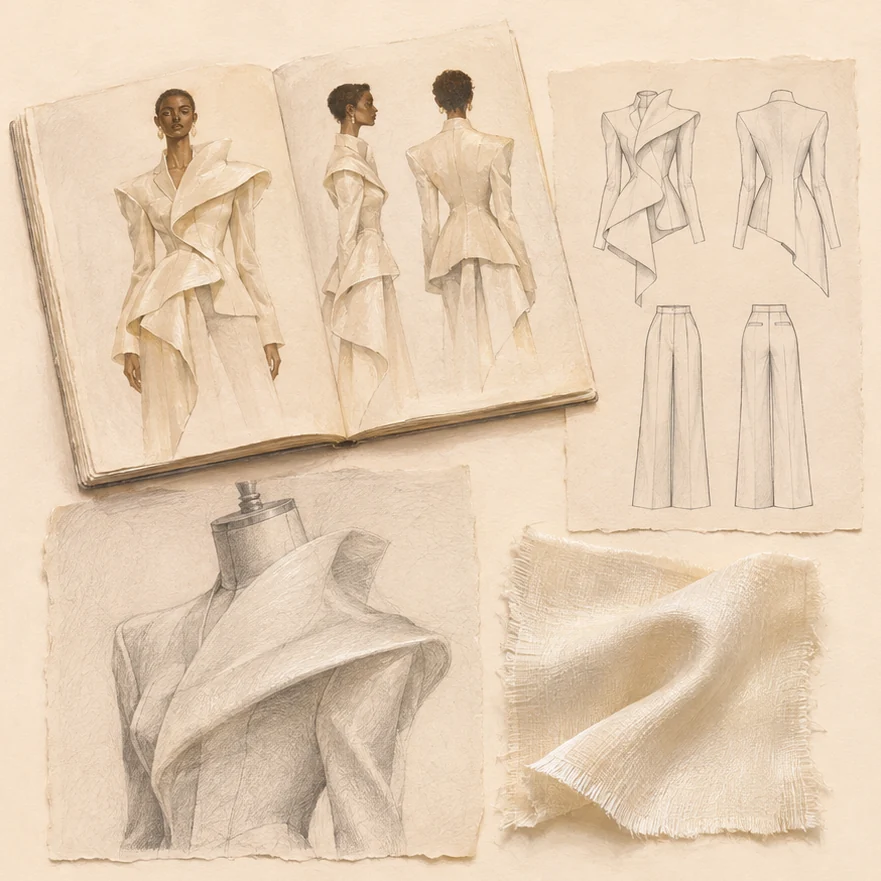
Make three edits from that material. For a prompt that asks for construction, choose a clear exterior, the relevant interior finish and any required drawings. For a general art portfolio, an observational drawing of the seated musician might deserve a full page. For a project about movement, pair the two fittings and use one sentence to explain the change. A useful caption would say, “I raised the back waist after the first seated fitting so the waistband stayed level while she played.” The reader can check that claim against the photographs. Only submit the versions that fit the school’s directions.
Before exporting, ask someone who has never seen the trousers to describe your contribution. Can they tell who designed the pattern, who sewed the garment and what changed? Can they read the caption at laptop size? Check originality and AI rules school by school, especially where the school sets a design assignment. Then preview the uploaded files in their final order. This last pass is where you catch the cropped hem, the duplicate slide or the back view accidentally left on your phone.
Questions high school applicants ask about fashion portfolios
Do I need to know how to sew before applying to fashion school?
It depends on the application. FIT’s AAS sewing brief requires garments you have made. Parsons accepts a broad range of media and Pratt asks for direct observation within a general visual portfolio. If you are new to sewing, you can start with artwork you have already made while learning to construct a simple piece. Check the instructions for each target school before relying on that plan.
Can I use the same portfolio for Parsons and FIT?
Keep one archive of your original work and make a separate submission for each. An original garment could contribute to both if it meets their rules. Parsons gives you discretion within a slide count. FIT prescribes design and sewing tasks. Set the two briefs beside each other and mark the exact images you can reuse before commissioning photographs or drawing a new set of figures.
When is a fashion portfolio review useful?
Seek feedback when you have a draft, a target program and time to act on the response. Bring one genuine editing question. “Which fitting photograph shows the change in the shoulder?” usually produces a more useful conversation than “Is this good enough?” Some colleges offer prospective-student reviews. For independent feedback over two rounds, Helen Sotropa’s $997 package covers up to 15 items per round, each with a 30-minute narrated video and a private 30-minute online session. The college sets its own submission limit. Read a sample critique or explore Helen’s college fashion portfolio review.
Return to the jacket on the table. The lining, the sketch and the view on a moving body can all tell the truth about the same piece. The school you choose helps determine which story deserves space. The work of making that choice is already part of becoming a designer.